Over the past three years, Aretek’s research program has been focused on securing regulatory approval and establishing industry benchmarks. With this foundation now in place, the program is transitioning toward optimizing system performance, efficiency, and scalability. Since Aretek’s founding, we’ve been working from our dedicated Research and Training Centre located on the York University campus in Toronto. In collaboration with academic and industry partners, we have already substantiated our wall system such that our engineering team obtained Ontario’s first Alternative Solution Permit for the 3D-printed net zero, multi-story student housing building at the University of Windsor. The data generated through this research enables us to optimize our wall system and support new Alternative Solution Permits, both in Windsor and in other municipalities. Building on this work, our engineering team continues to focus on structural testing and innovative mix designs that push the boundaries of what is possible with this emerging construction technology.
Our commitment to ongoing research extends beyond the Aretek Research and Training Facility and academic labs to live research environments, such as our Windsor 3D Housing Project, providing a rich opportunity for continuous learning, validation, and improvements during and post-construction.
There are two research initiatives at the Windsor Housing Project; the first one is an NGen-supported collaboration with Giatec focused on adapting their technology and developing processes to embed sensors within 3D printed wall elements. These sensors capture real-time information on early-age curing behaviour during printing under real construction conditions, as well as ongoing data after construction. The availability of this data, both in real time and post-construction, supports Aretek’s continued refinement of mix designs, print parameters and processes, and quality control for 3D printed structural elements.
The second research project, conducted in association with Dr. Liam Butler (York University), Dr. Sreekanta Das (University of Windsor), and Dr. Joshua Woods (Queen’s University), involves the installation of fibre optic sensor cables within the printed structure during printing. These sensors provide data that supports evaluation of structural behaviour and long-term performance of 3D printed concrete elements in a full-scale, occupied building.
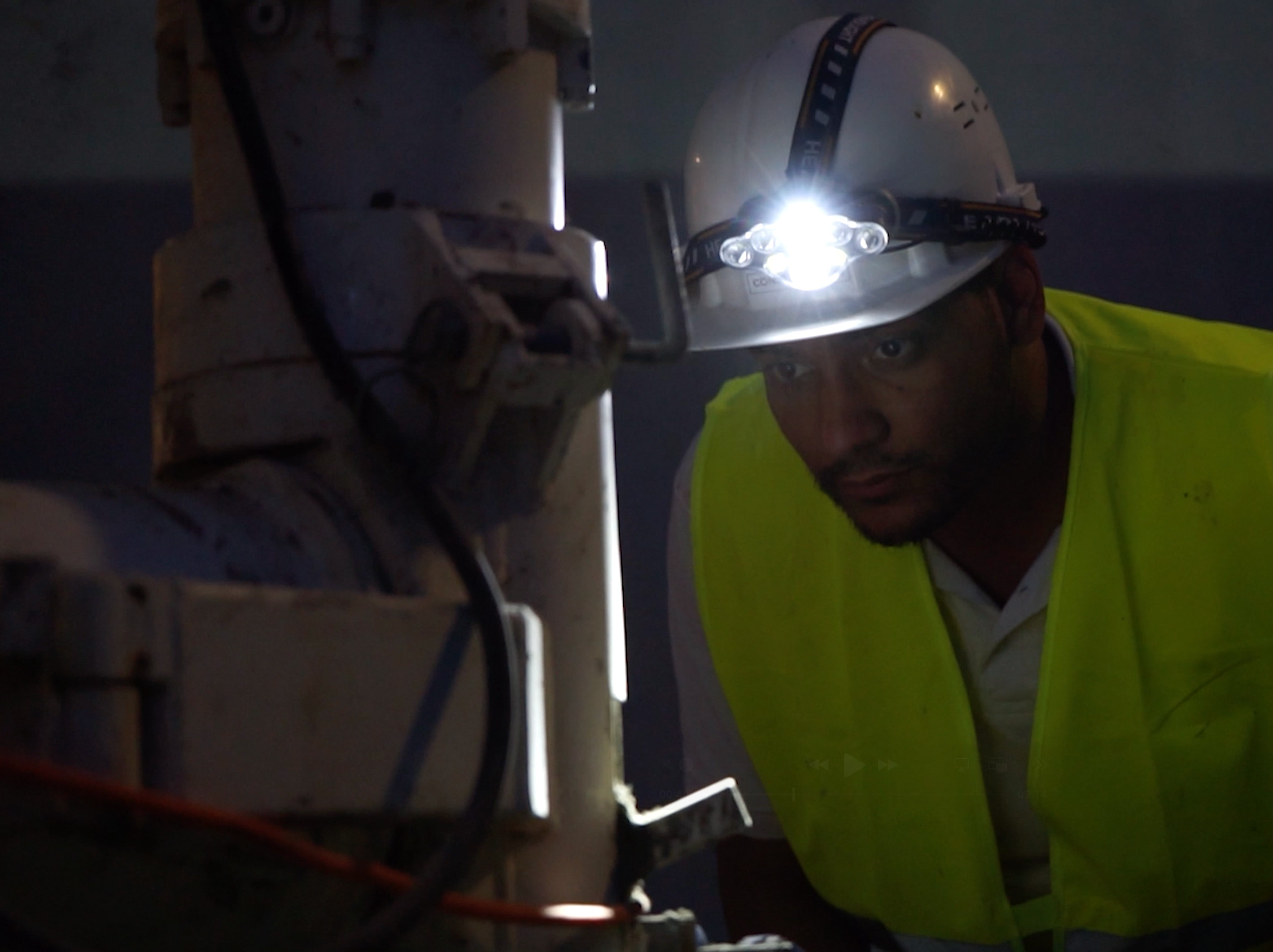
A core focus of Aretek’s research program is developing mix designs optimized for 3D Construction Printing that perform reliably under real construction conditions, while taking advantage of the flexibility afforded by 3D-Concrete Printing (3DCP) to move beyond traditional concrete, particularly in addressing sustainability challenges related to carbon intensity, material efficiency, resource use, and long-term durability.
These projects exemplify our commitment to innovation and technology, pushing the envelope of what is possible with mixes that can store thermal energy and cost-effective, low-cement, and climate-resilient dry mixes for 3DCP using Supplementary Cementitious Materials (SCMs), Phase Change Materials (PCMs), and even recycled glass, optimized for Canadian climates.
We are excited to be working on a Two-Component Mix (also known as 2K mix in 3DCP) that significantly reduces cement content while maintaining the required compressive strength. This mix is designed for printers that use two material inputs, allowing more precise adjustment at the nozzle depending on conditions at the time of printing. Our COBOD gantry printer uses a 2K system, while the Constructions-3D Maxi-Printer uses a One-Component system (also known as 1K system). Aretek plans to take their mix designs to market once the validation is complete.
Another mix design project explores the use of mining waste as SCMs for 3D printed concrete. This work examines how industrial byproducts can be repurposed into viable construction materials, opening new possibilities for reducing embodied carbon while addressing material sourcing and waste challenges.
Aretek is actively engaged in structural research focused on optimizing the performance, reliability, and constructability of 3DCP elements as load-bearing wall systems. Building on a validated and approved foundation, this work supports continuous improvement toward more efficient, repeatable, and code-compliant construction. As with its other research initiatives, this program is conducted in collaboration with multiple universities and led by leading professors in the field.
This research includes full-scale testing of printed wall systems under realistic loading conditions. Rather than relying on small samples or theoretical assumptions, the work examines how printed walls behave under axial load, in-plane shear, and combined forces representative of real buildings.
Additional projects focus on out-of-plane behaviour and flexural performance, including how loads move through printed wall systems and how printed elements interact with floors, roofs, and other structural components.
Non-destructive testing and QA/QC-oriented research complements this work by examining hardened performance characteristics, thermal behaviour, and water resistance in printed wall assemblies.
Taken together, this structural research provides the evidence needed to support Alternative Solution Permitting, inform emerging standards, and build confidence among engineers, regulators, and owners. It reflects the level of rigor required to move 3D printed concrete from isolated demonstrations to repeatable, approved building systems.
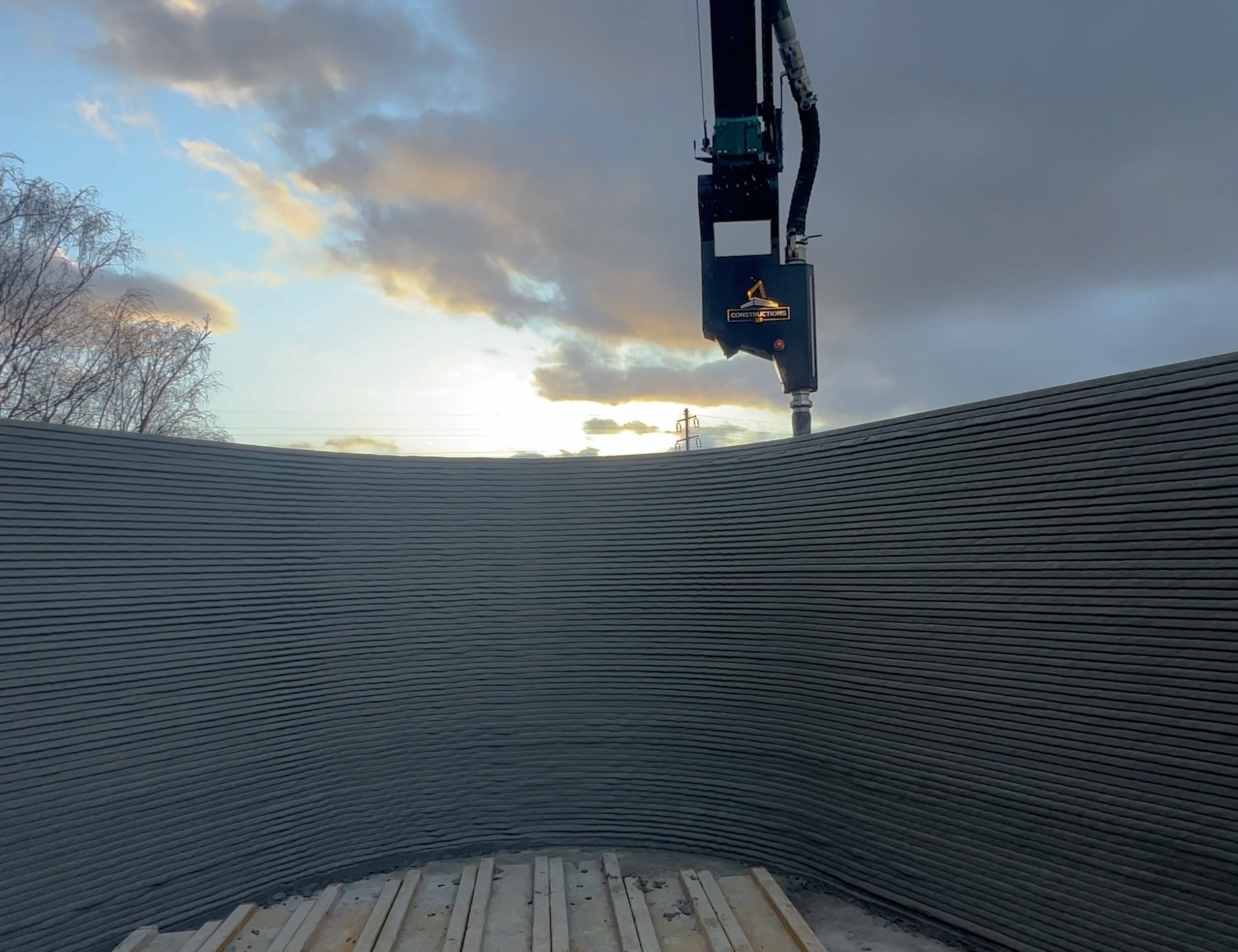
Aretek’s research team will continue integrating new technology and innovation into live projects, applying lessons learned and using collected data to drive continuous system improvement. Over time, this growing proprietary dataset will allow Aretek to apply advanced analytical tools, including artificial intelligence (AI) to improve aspects of 3DCP such as processes, costing, and scheduling. When combined with ongoing mix design and structural research, these live research projects provide empirical evidence supporting the structural, durability and constructability performance of 3D-printed concrete systems. This research and development work directly informs the creation of optimized, market-ready construction solutions.
Our Research and Development roadmap points the construction industry to the future of construction, where we can build faster, cheaper and better than before. We invite you to come and build with us.
Related stories:
Aretek’s Engineered 3DCP Wall System: Making Additive Construction Buildable Today
Engineer-Led Delivery for Additive Construction